
Ultimate Guide to Chinese Ancient Architecture


 Amy
Amy
 China Travel Tips
2025-12-04
China Travel Tips
2025-12-04
Chinese architecture is a three-dimensional crystallization of the nation’s history, philosophy, and art - a history book that can be read without words. For travelers, appreciating ancient Chinese architecture is not merely about sightseeing; it is an immersion into a unique worldview and way of life. This guide will take you through time and space to understand the codes hidden between beams and pillars and to discover the most remarkable architectural treasures worth exploring.
Key Ideas to Understand Chinese Ancient Architecture
Before you start exploring, knowing a few key concepts will greatly enhance your experience:
Harmony with Nature
Chinese buildings are designed to fit into the landscape - not fight it. Gardens "borrow" distant scenery, and temples follow the shape of mountains.
The Wooden Building System
Most traditional buildings use flexible wooden frames. The star feature is dougong, a nail-free bracket system that absorbs shock like ancient LEGO.
Colors also show status: yellow = emperor, red = nobility, green = officials.
Symmetry & Courtyards
Important buildings line up along a north–south axis. Spaces unfold through layered courtyards, giving a quiet, hidden beauty as you walk deeper inside.
Roofs Tell the Story
The roof shows a building's rank:
Hip roof (highest), seen in the Forbidden City's main halls
Gabled-hip roof (second-highest)
Simple gable roofs (homes)
Upturned eaves lift the corners for better light and rain drainage
China's Greatest Ancient Structures
China's architecture is a living timeline of its civilization - from imperial palaces to mountain temples and garden retreats. Use this guide to explore the country's most iconic styles and where to experience them.
Palace Architecture - The Art of Imperial Power
Essence: Monumental symmetry, strict hierarchy, and cosmic order.
Top Destinations
Beijing · Forbidden City - The world's largest ancient palace complex. Walk the grand central axis, admire the Hall of Supreme Harmony, and look for the rare set of ten roof guardians - the highest honor in imperial architecture.
Shenyang · Imperial Palace - The early Qing court before entering Beijing. A compact palace blending Manchu, Mongolian, and Han influences.
Religious Architecture - Sacred Beauty Across Traditions
Buddhism, Daoism, and Islam each created unique architectural masterpieces.
Buddhist Temples
Mount Wutai · Foguang Temple (Shanxi) - Home to one of China's oldest surviving wooden halls (Tang dynasty). Hidden deep in the mountains - a true pilgrimage.
Dule Temple (Tianjin · Jizhou) - Features China's oldest temple gate and a towering Liao-dynasty Guanyin statue.
Daoist Sites
Wudang Mountains (Hubei) - A Ming-era imperial Daoist complex. The mountaintop Golden Hall, clad in gilded bronze, floats above the clouds.
Islamic Architecture
Xi'an · Great Mosque - A serene fusion of Chinese courtyards and Islamic prayer spaces - a masterpiece of cross-cultural design.
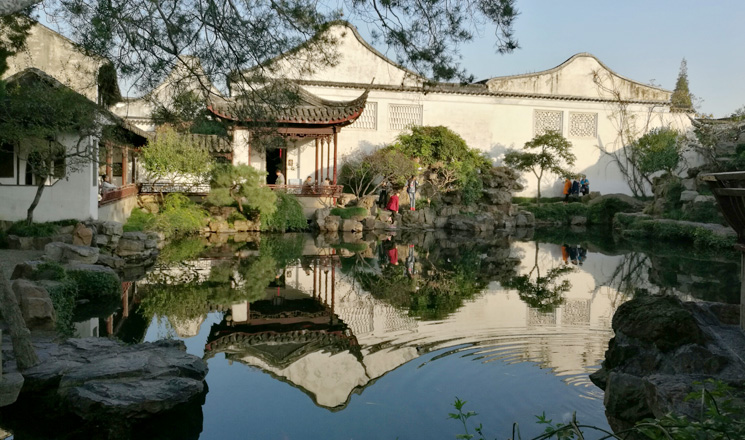
Classical Gardens - Miniature Worlds of Poetry
Essence:"Crafted by humans, yet seeming born of nature."
Top Destinations
Suzhou Classical Gardens
Humble Administrator's Garden: Water-centered and spacious
Lingering Garden: Exquisite craftsmanship and layered spaces
Master of the Nets Garden: Small, elegant, magical at night
Beijing · Summer Palace
A grand imperial landscape garden blending lakes, hills, and painted corridors.
Traditional Villages & Vernacular Homes - Living Museums
Essence: Architecture shaped by geography, materials, and clan traditions.
Top Destinations
Xidi & Hongcun (Anhui) - Textbook examples of Huizhou style - whitewashed walls, grey roofs, horse-head gables, and beautiful water systems.
Fujian Tulou (Yongding & Nanjing) - Giant earthen roundhouses of the Hakka people - communal, defensive, and visually striking.
Wang Family Courtyard, Shanxi: - A huge traditional mansion built by a wealthy merchant family. Located in Lingshi, it's much bigger than normal homes and is called "the No. 1 folk residence in China."
Built on a hillside with many connected courtyards, it feels like a small city. The place is famous for its beautiful stone, brick, and wood carvings, showing how Shanxi merchants lived and protected their family wealth in the Qing dynasty.
Imperial Tombs - Monuments to Eternity
Essence: The belief that the afterlife mirrors earthly life, guided by feng shui.
Top Destinations
Beijing · Ming Tombs - A vast royal necropolis. Changling Hall features 60 colossal nanmu pillars - a rare architectural treasure.
Nanjing · Ming Xiaoling - Famous for its winding Sacred Way and powerful stone guardians, perfectly integrated with forested mountain slopes.
Living Ancient Towns - Everyday Life in Historic Streets
These towns are not museums. People still live, cook, shop, and celebrate festivals here. Architecture, markets, temples, and daily life all blend together.
Pingyao - A Classic Walled Han Chinese City
A fully preserved Ming–Qing city with complete walls, straight main streets, and traditional courtyard homes.
Highlights:
Rishengchang Bank: The birthplace of China's banking system.
County Government Office: Best-preserved yamen; has daily court shows.
Shuanglin Temple: Famous for colorful clay statues.
Lijiang (Dayan) - Water Canals & Naxi Culture
A town built with flowing canals, wooden Naxi homes, and mountain views. No city walls - water is its “lifeline.”
Highlights:
Mu Residence: Grand palace of the Naxi chieftain.
Black Dragon Pool: Perfect view of Jade Dragon Snow Mountain.
Naxi Ancient Music: Performances of very old Chinese music.
Jianshui - Confucian Culture in the Southwest
Elegant old streets, a large Confucian Temple, many historic wells, and a beautiful private mansion.
Highlights:
Chaoyang Tower: Older than Tiananmen; great views.
Zhu Family Garden: A classic Qing-style house and garden.
Narrow-Gauge Train: Passes scenic bridges and fields.
Shaxi - A Quiet Stop on the Ancient Tea-Horse Road
A peaceful rural town with stone streets, Bai-style homes, an old market square, and simple yellow–earth walls.
Highlights:
Xingjiao Temple: Rare Bai-style Buddhist temple.
Friday Market: Local villagers come to trade - very authentic.
Yujin Bridge: Beautiful at sunrise and sunset.
Practical Visiting Tips & Deeper Experiences
1. Best Times to Visit
Weekday mornings: The easiest way to avoid crowds and enjoy the calm beauty of historic sites.
Be sure to stay at least one night inside or near the old town. The early morning and late evening-after day-trip visitors have left - are when the old town reveals its true local life and quiet beauty.
All seasons work:
Spring: Blossoms in classical gardens.
Autumn: Blue skies and red walls at imperial sites.
Winter: Snow scenes in places like the Forbidden City.
2. Consider a Guide or Quality Audio Tour
For culture-rich sites such as the Forbidden City, Summer Palace, or Suzhou gardens, a local guide can reveal stories and details you might otherwise miss.
Independent travelers can use official audio guides - most major attractions offer English versions.
3. Experience Upgrades - Great for Families
Beijing: Join a mortise-and-tenon workshop and build a small wooden model to understand ancient construction techniques.
Suzhou: Take a garden photography workshop and learn how to capture classic"framed views."
Southern Anhui villages: Stay overnight in places like Hongcun; enjoy the early-morning mist and quiet reflections before tourists arrive.
Xi'an: Rent a bike and ride along the Ming Dynasty city wall at sunset for stunning views of old and new Xi'an.
Grand Imperial & Ancient Architecture Journey (8–10 Days)
Highlights: A complete journey through the peak of Qing-dynasty imperial architectures and the ancient treasures in Shaanxi, The Yingxian Wooden Pagoda - the tallest surviving ancient wooden tower - is a structural marvel. This is the ultimate route for serious architecture lovers.
Beijing, Datong, Pingyao, Xi'an in 10 Days
Get a quick answer from ETripChina team
Contact Us



0086 773 5842555
Mon-Fri 9:00-18:00
email:contact@etripchina.com
WhatsApp: +86 13617732531
Best Travel Tips
- 1
Complete Guide to Payment in China for Overseas Travelers
- 2
China Climate & City Travel Guide: Find Your Perfect Season
- 3
China's Ultimate Food Guide: A Journey Through a Kingdom of Flavors
- 4
Guide to Chinese Festivals and Public Holidays
- 5
China's Ultimate Family Theme Park Guide
- 6
China Travel Guide | About China
- 7
Ultimate Guide to Chinese Ancient Architecture
- 8
Voyah Dreamer 7-Seater MPV Rental